Showing posts with label eating disorders. Show all posts

Sunday, April 10, 2011

Grateful Tree and the Fashion of Gratitude

Last year, I had the opportunity to interview Brett Clouser (of the reality show Survivor) and Courtney Schreiber of The Monument of Our Hearts (TMOOH). I was so impressed by their clothing company and their mission to "design apparel that creates conversations and empowers people to feel beautiful." In addition, they donate a percentage of their profits to different organizations that promote healthy body image. You can check out that post here (and their merchandise here). While I believe that fashion is generally created with the intention to inspire conversations about beauty, perhaps it is designers like Brett who are trying to empower people by starting different kinds of conversations that are counter-intuitive to the fashion industry's definition of beauty. 


Michelle, me, Karen- grad school friends!
It is rare to find socially conscious clothing lines, which is why I was super excited to hear that one of my friends from graduate school recently started such a clothing line- The Grateful Tree!! But the most exciting part about it is that the clothing company she started is focused on gratitude and helping others. Karen Thiel, the designer, started this company as a way to raise money for her favorite charities. In addition, when any product is sold, a tree is planted through their partner organization Trees for the Future. You can read more about that here. Karen and I met while we were both graduate students at Arizona State University studying counseling psychology- we endured some long study sessions together but have fun memories of Phoenix Suns games and taking a girls trip to Vegas! While we were in school, Karen was volunteering and doing her internship at Healthy Futures, a practice in Scottsdale that specializes in treating eating disorders. (In fact, one of the charities that she donates to is NEDA! The National Eating Disorders Association- more on that below..). Anyways, she got a job there after graduation and worked for awhile before taking a break to launch her clothing line. I had a chance to ask her some questions and wanted to share more with you about what she is doing!!


Q: What inspired you to start Grateful Tree? And where did the name come from? 


Karen: Grateful Tree is a combination of things I love: Positivity, apparel with a cause, comfortable clothing, helping others, & the fashion of gratitude. Last year I was going through much work stress. I craved a creative outlet and something that was light hearted and fun. It felt right to have giving as a key component. The name- “Grateful” came because I wanted to promote the fashion of gratitude; that a shift in thoughts and perspective towards finding appreciation is powerful in times of distress and crucial for finding enjoyment in life. I chose a virtual “Tree” due to my liking of metaphor and symbolism. Trees encompass meaning from so many things; growth, nature, yoga, strength, stability, and beauty. 


Q: Tell me about your shirt that raises money for NEDA!
Karen: I’ve dedicated the Grateful “Hope” shirt to NEDA. Grateful Tree will donate 30% of proceeds from sales of this tee to help support their endeavors. The shirt is turquoise, vintage soft, and made in the U.S.A.
The Grateful 'Hope' Shirt


Q: Why did you choose NEDA as a charity to give to? 


Karen: I’ve been familiar with the work of NEDA for the last few years while working as a clinician in a counseling clinic specializing in the treatment of eating disorders. I admire their creative ventures that bring hope and awareness to communities. Societally, I think that eating disorders are misunderstood and underdiagnosed. Having frequently witnessed the strife that they can have on individuals and families, I feel tremendous compassion for the cause.


I am so proud of Karen for all that she is doing to raise awareness of eating disorders and donating time and money to such a great cause. Beyond that, it's exciting to see someone pursuing creative and unique avenues to impact the lives of others in positive ways. I would encourage you all to check out the website, which is located at www.thegratefultree.com  --you can access it by clicking here. Karen also has a blog that you can check out here! If you are interested in updates and new products, you can also follow The Grateful Tree on Facebook! 

Saturday, March 26, 2011

Beauty and The Mile High City !!!

Happy Saturday, everyone! It appears that I have taken an unintentional vacation from blogging :). I think it’s been almost two weeks since I’ve posted! A LOT has been going on! I am currently on a plane from Denver to Detroit (hey Eminem!) and will hopefully be back in Raleigh in a few short hours after a quick layover.

This past week, I had an opportunity to visit Eating Recovery Center in Denver on Thursday and Friday. It was an amazing trip and I’m looking forward to sharing more about my time there very soon! I will say… the staff there is beyond excellent. Four of the leading eating disorder doctors in the world work there (this is no joke), and together make up a pretty powerful team. I absolutely loved my time there, love their approach to treating adolescents and adults with eating disorders, and loved my time in Denver. I even got to see one of my oldest friends, Melissa, who lives in Denver- so, so fun.

I did have something I wanted to share real quick, in going along with my last post- ‘Body Beautiful.’ I watched Glee for the first time ever while I was on my way out to Denver Thursday. I’ve been told I’m a little out of the loop since I’ve never seen an episode so I thought I would take advantage of my time cooped up in a plane to catch up. Because I haven’t seen it before, I can’t really tell you much about where I was in the storyline, who the characters are etc.. But it just so happens that I watched an episode about beauty and weight. Funny, huh? :) The cheerleaders were being weighed like wrestlers, and had to ‘make weight’ in order to cheer at a pep rally or something. Well, this one girl started trying to starve herself so she could make weight. At the end, she realized that the whole thing was not worth her health and well-being, after being miserable and having another girl open up and share her own experiences with unhealthy, disordered eating. It was slightly cheesy and there were a few touchy, unfunny jokes about weight/eating disorders, but the overall message was really important and good. Below is a clip from the episode (wish I could find one that wasn't just the song, but -- I just thought it would be fun to post anyways). Check it out- and don't mind the first few seconds of the clip that are in Spanish and advertising a video game or something :).


I’m going to sign off and catch up on a few things, but I’m excited to share more about my trip to Denver soon! Also, don’t forget about the National Eating Disorders Association Walk happening THIS SUNDAY!!! At Meredith College in Raleigh. If you are interested in participating (or are not able to be there but would like to donate to the cause) follow this link. 

Sunday, February 27, 2011

The Week in Review...

As National Eating Disorders Awareness Week draws to a close (well, it's actually over as of yesterday- haha), I wanted to share a few quick highlights from went on in Raleigh this week. There were several events open to the public (if interested in seeing what they were, follow this link) and overall, they were pretty well attended! Ellen Morrison, a local dietician specializing in eating disorders, gave a talk on Tuesday night, in conjunction with a brave and strong recovered patient. Together they discussed what to do if you suspect a friend or loved one is struggling with an eating disorder. It was such a great presentation, and people had opportunities to ask questions and share. It was a great night. If you are interested in the information that was presented that night, shoot me an email or let me know in the comments section of my blog and I can get that for you!


On Thursday night, the documentary Beauty Mark was shown in Jones Chapel at Meredith College. I had not seen it before, and I highly recommend it. Diane Israel documents her journey of recovery from an eating disorder, as well as the media's influence on how we define beauty in our culture. Take a look at a clip below!


The last event of the week was a fashion/art show that honored women of all sizes and shapes. It was really a beautiful night. If I'm being totally honest, I was a little hesitant about the whole idea of having a fashion show, just because the fashion industry is SOO loaded when it comes to beauty/eating disorders/etc. While I understood the intention, and I knew that the models had been nominated for this event based on qualities of inner beauty, I still felt like a fashion show might send the wrong message. But I was SO wrong. It was actually such a powerful experience to see such a diverse group of young women modeling (cute clothes I might add- thanks for donating the clothes for the night, Francesca's!!). We also were able to auction off some art that had been donated by eating disorder patients. Proceeds will benefit NEDA, and will be added to the donations that are have been given for the Raleigh NEDA Walk. 


If you are interested in participating, volunteering or walking in the Raleigh NEDA walk that is coming up on Sunday April 3, follow this link to register or send me an email for more info! Would love to see your smiling faces, out supporting a great cause on an April Spring day! :) And as a disclaimer, you don't have to walk on the day of the event. You can just come out and show your support! There will be different things going on- booths, a speaker, a silent auction... I can't wait! :)

Wednesday, February 23, 2011

On 'Health'

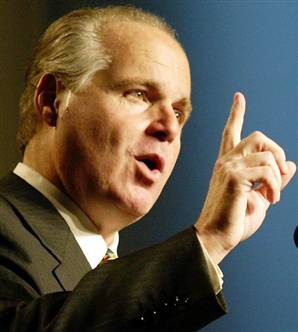
In going along with my new theme of 'compassion' (see this post for more), I really really want to address the comments that Rush Limbaugh made on Monday about Michelle Obama. I just heard about this-- and am thankful for an opportunity to work on being compassionate:-). For those of you who haven't heard (I almost hate to tell you), but on his radio show on February 21st, Limbaugh made some pretty inflammatory comments about the First Lady. As you may know, she has worked very hard on initiating a campaign to fight childhood obesity. There have certainly been mixed feelings from the eating disorder community concerning her approach, but nonetheless, she ended up adding eating disorders under the campaign's umbrella and is (hopefully) working to address eating disorders as well.

Anyways, from what I understand, Michelle O. was vacationing at a ski resort recently with her family, and it was made known that she enjoyed a nice dinner while she was there, which included ribs. Limbaugh's comments: "The problem is, and dare I say this, it doesn't look like Michelle Obama follows her own nutritionary, dietary advice. We hear that she's out eating ribs at XXXX calories a serving with XXX grams of fat per serving. I'm trying to say that our First Lady does not project the image of women that you might see on the cover of the Sports Illustrated Swimsuit Issue or of a woman Alex Rodriguez might date every six months or what have you." He went on to say, "She's a hypocrite. Leaders are supposed to be leaders. If we're supposed to eat roots and berries and tree bark, show us how." Yikes!!!

While I am really sad that he made these comments, and would like to respond with some choice words, I think this is a great opportunity to address an important issue! Perhaps this whole exchange once again highlights the fact that we really struggle with extremes in our society. Black and white thinking, the 'diet mentality' .... call it what you want. But seriously-- who decided that you can't be healthy and eat ribs at dinner when you're on vacation (or not on vacation)? Being truly healthy requires moderation and balance. Simply eating "roots, berries and tree bark" would be just as much of a problem as if we all ate ribs for every meal.

Another thing I want to challenge is the assumption that looking like a swimsuit model is the picture of health. I could be wrong here, but it sounds like Limbaugh is saying that Mrs. Obama should look like a model. You cannot tell how healthy someone is simply by looking at them. Of course in extreme cases, yes- you can see with your eyes when someone might be ill (very underweight or very overweight). But people who may look fit, toned or 'in shape', thin, those who look average and healthy, ... they may have heart problems, blood pressure problems, bone density issues, etc due to unhealthy behaviors (diet pills, over exercise, steroids, purging, etc)... You never know how someone is treating their body and you never really know how healthy someone is just by looking at them. To infer that Michelle Obama needs to look like a swimsuit model in order to prove that she is following her own dietary advice is almost kind of funny because it is just so not true. The suggestion that swimsuit models or girls that A-Rod dates are the barometer of health is, in my opinion, one of the reasons why women in our culture struggle so much with knowing what it is to be truly healthy, not to mention why they have a tough time believing that beauty comes in all shapes and sizes. Most people (95% of the population in fact) could be healthy, balanced eaters and no matter what, will not ever have bodies that look like models. 5% of the population has a body type in nature that resembles that of a model.  And then there is airbrushing...  many of the models and images that we see are not even real. The point is- we aren't all made the same and we all have different body types, bone structures, etc. It is irresponsible to perpetuate the myth that 'health' looks one way, but it is also irresponsible for us to buy into it.

This post is getting lengthy- so I will conclude by encouraging you to think about what true health is and where you came up with your beliefs about what it is to be healthy. 'Health' is a loaded word. Limbaugh's assertions about health are clearly skewed, but remind all of us that we need to take a step back and consider what true health really looks like. Are extremes a measure of health?? How do you know if you are being truly balanced in your approach with food? These are important questions to consider.

Wednesday, January 19, 2011

A Little Update...

Back in April, I felt inspired to re-post a blog that Nancy Matsumoto wrote regarding the dilemma of when to speak up and express concern over a friend's eating disorder. You can read that post here. Nancy is a blogger (she blogs over at Eating Disorders and Nutritional News), but she is also an accomplished writer, as well as a friend that I have mentioned on my blog many times. Recently, a reader of mine responded to that particular blog post and was really touched by what Nancy had written. I shared that with Nancy, who then wrote a follow up blog. If you are interested in checking that out (it's a good one!), follow this link. Thanks to Nancy for her kind and compassionate words on such a difficult topic!

Wednesday, January 5, 2011


Happy New Year, friends! While I planned on my first post of 2011 being lighthearted with some encouraging thoughts for the New Year (don't worry, those are coming soon), I felt like I needed to first address something that has been coming up the last few days in many conversations that I have had with friends and clients alike. French model Isabelle Caro died at age 28 after a long struggle with anorexia. She had been struggling with anorexia since her youth, the struggle spanning half of her short life. When she entered the world of modeling, she was already struggling with her eating disorder; however, the environmental pressures resulted in further triggering her into an extremely dangerous state which in 2005 ultimately led her into a coma. Doctors thought that she would not survive, but she came out of the coma, was discharged from the hospital and continued to model. She wanted people to see the devastating effects and impact that an eating disorder has on its sufferer, and as a result, she decided to pose nude for an Italian advertisement in 2007 in an attempt to de-glamorize the thin ideal. More recently, within the last few years, she had been on different television shows and news programs discussing her experience with anorexia. Her recent death is extremely upsetting- and this entire story has raised some really important questions for me.

First, in 2007, when Isabelle posed for this campaign, she reportedly said regarding her intentions and hopes for such a campaign.. "I've hidden myself and covered myself for too long. Now I want to show myself fearlessly, even though I know my body arouses repugnance. I want to recover because I love life and the riches of the universe. I want to show young people how dangerous this illness is. " I think what makes me so sad about this is that she wanted to recover, she wanted to live a full life, and yet she wasn't able to do it on her own. Anorexia is a mental illness, and it is extremely difficult for one to recover on her own. I guess I just wonder if her death could have been prevented. Why did the people around her continue to allow her to be the face of anorexia in the media, rather than helping her take the steps to health that she could not take on her own? I am not saying that her death is the fault of her acting coach, or booking agent, or doctor, or whomever, but when someone suffering from an eating disorder reaches a certain point (not just weight wise- but health wise), hospitalization/treatment is necessary for recovery. How is it that she was made famous by her eating disorder, and yet people stood by and let her continue in it? I'm angry that she was encouraged and supported to keep putting herself out there and it makes me wonder why the people closest to her did not stop her and lovingly get her the help that she needed. I know that the sufferer has to want to recover, and no one can force recovery, but it sounds like she did want to recover.. she just was not able to do it on her own, like so many others. I don't know if the people around Isabelle tried to get her into some kind of treatment, and I would have to imagine (or hope) that they tried at some point. But I think this whole story highlights both the nature of anorexia as a mental illness AND the importance of people receiving the appropriate care, treatment and help that they need-- and how sometimes that means that they NEED help from others in order to get there.

Secondly, the Italian fashion house that promoted Isabelle's 'no anorexia' campaign wanted to support Caro by using " the naked body to show everyone the reality of this illness, caused in most cases by the stereotypes imposed by the world of fashion. " I think that eating disorder education certainly needs to happen, and I respect the efforts of those involved to that end. What concerns me is that eating disorders are not caused by the fashion industry. Certainly the thin ideal, the unrealistic standard of beauty created by the media etc contributes, but if the fashion industry causes eating disorders, then why do we not all have them? It is because eating disorders are caused by many different factors, including significant genetic ones. 

I guess all of this got me thinking again about helpful ways to educate people about eating disorders. How do we effectively portray the severity and danger of an eating disorder while also not plastering photos around that can be more triggering and harmful than good for people to see? When someone suffering from an eating disorder sees a deathly looking skeletal body and may not look the same, she may be tempted to think that she is not really suffering or struggling as badly, or that her health is not being impacted. And in some ways, images further stereotype what an eating disorder 'looks like.' One in four college aged women suffers from eating disorders, but that does not mean that one in four college aged women are walking around looking like skeletons... or that their eating disorders are any less of a threat to their health because of what they look like. I think we need to be careful about how we communicate about eating disorders. I don't know that I have any good global solutions at this point, but I think it's important and necessary to ask the questions. 

In all of this, I am just sad that another life has been lost as a result of a devastating mental illness. I hope that her death is not in vain, and that she may serve as a reminder to all of us that anorexia (in addition to other eating disorders) is a real and dangerous illness that is capable of tragic outcomes when not treated.  

Wednesday, December 22, 2010

Helpful Hints for the Holidays...


I came across this creative acronym below ('happy holidays') on a site called 'Something Fishy'-- a resource for eating disorder information, as well as referral sources for treatment care providers. Anyways, Sharon Sward is the one who created this acronym, and it is a little tool that serves to remind us of some helpful things during a season in which food can be a central part of celebrations, and consequently can cause anxiety, discomfort, urges and triggering thoughts and feelings. Check it out below... 


Hunger means you eat when physically hungry instead of emotionally hungry.


Attitudes about your size have to do with the size of your heart instead of the size of your body.


People accept and value you for who you are, not according to how you look.


Problems are resolved in ways other than stuffing your feelings with food.


You spend as much time and energy on helping others as you do on how you look.


Happiness comes from within rather than from expectations of others.


Occasions for the holidays emphasize relating to others instead of emphasizing food.


Love of self means you deserve to treat yourself in the best humanly possible way.


Identity of self involves more than how you look.


Disapproval of self is changed to approval of who you are.


Acceptance of what one can not change includes your body features.


You treat yourself as you treat your best friend.


Society values you for being you without emphasis to your weight or size.


by: Sharon Sward, President of Eating Disorder Professionals of Colorado
Author of You Are More Than What You Weigh
Radio Talk Show Host on self-esteem, weight, and eating disorders

Wednesday, December 15, 2010

Jenifer Ringer: A Body Image Role Model for the Holidays


One of my favorite Christmas traditions growing up?? Going to see the Nutcracker Ballet. I was pretty involved in ballet until the 7th grade, so it made the ballet even that much more meaningful and special to me. I have to say it's been a few years since I've gone- I think the last time I went I saw a very 'interesting' production at the Raleigh Memorial Theatre that featured a more modern interpretation and ballet style. Because I have such positive and warm memories surrounding the Nutcracker, it was even more sad to hear about what happened recently- that something so festive and beautiful could turn into an opportunity for criticism and ignorance. 

For those of you who are unfamiliar with the story, there was a pretty big controversy recently over some comments that dance critic Alistair Macaulay from the NY Times wrote about Jenifer Ringer, the ballerina playing the role of the Sugar Plum Fairy in the New York City Ballet's production of the Nutcracker. His critical comments were focused on her weight, which is bad enough- but she has been open about her struggles with anorexia and disordered eating in the past, which seemed to make this critique even more upsetting, disappointing, and irresponsible. Ringer was interviewed on the Today Show by Ann Curry, and I was extremely moved by how strong, gracious, articulate and healthy she was in communicating about the whole thing! This clip below is the segment that was featured- it provides the backstory as to what actually happened, and also includes the interview with Ringer. In total it is about 7 minutes, and I would really encourage you to watch it. (I have watched it a few times!!) She does a fabulous job of articulating that being a dancer did not cause her eating disorder (she busted an ED myth!) and around the 6:40 mark she has some very encouraging words for us about our bodies. Check it out below.


Saturday, November 6, 2010

Drunkorexia Revisited


I have noticed that there have been a few articles circulating recently on 'drunkorexia'... Around this time last year, I wrote a post on drunkorexia that I thought I would re-post it in light of the attention it has been getting in the news! A recent article was written in the LA Times just a few weeks ago (follow this link to read it!)--it's a good one!

Drunkorexia is one of the latest trends in eating disorders. Likeorthorexia, drunkorexia is not a medical or psychological diagnosis; you will not find this term in the Diagnostic and Statistical Manual of Mental Disorders. So what is drunkorexia? You might have a clue based on its name, but it is the combination of anorexic or bulimic eating disorder behaviors and alcoholic/binge drinking behaviors. The director of outpatient clinical services for the Renfrew Center, a nationally recognized eating disorder treatment facility, Dr. Douglas Bunnell explains: "Binge drinking is almost cool and hip, and losing weight and being thin is a cultural imperative for young women in America. Mixing both is not surprising, and it has reached a tipping point in terms of public awareness."

This kind of eating disorder is commonly seen in female college students, as participation in binge drinking continues to increase among this population. "Research shows that between 20 and 40 percent of women who suffer with bulimia also have a history of alcohol and/or drug problems. In one study, for example, 37.5 percent of bulimic individuals reported excessive alcohol use and 26.8 percent had a history of alcohol abuse or dependence" (Emax Health, Oct 2009). Another study was conducted in 2009 at the University of North Carolina at Chapel Hill and looked at the relationship between eating disorders and substance use in 13,000 women. What researchers found was that women who had an eating disorder were more likely to use substances than their counterparts without eating disorders. For more on this study, click hereto access this article on Emax Health.com.

It is important to highlight the connection between eating disorders and alcohol-- according to the National Association of Anorexia Nervosa and Associated Disorders, 72 percent of women who are addicted to alcohol are also engaging in eating disorders. This is a very high number. Considering the health dangers of both alcoholism/binge drinking and eating disorders, the combination is very threatening. Health professionals need to be aware of this condition, as treatment is so essential to avoid the potentially fatal consequences of such behaviors. It is also helpful for people to be informed about drunkorexia, as we all might have family members, loved ones or others that we know who are possibly dealing with it. For more information, follow this LINK to read an article published in the NY Times last year on drunkorexia.

Wednesday, November 3, 2010

Happy November!

It's a new month, and with a new month, comes some good news from a recent study... Results from a national survey (conducted by the National Eating Disorders Association) reveal that the general public's awareness about eating disorders has dramatically increased. Great news! According to the study, 82% of people would agree that an eating disorder is a physical OR mental illness. 78% of people believed that they would know if someone was suffering from an ED, and 95% said if they knew someone that was suffering from an ED, they would help the person seek the appropriate help.

That is definitely progress and encouraging news. : ) One area that the survey highlighted was the fact that overall, specific knowledge about eating disorders has not increased and that the incidence of eating disorders has not declined. Rather than being discouraged by this part of the survey's results, it just reminds me that there is still a need to continue to raise awareness and educate people about eating disorders. There has been a lot in the news this week about eating disorders... between Portia de Rossi sharing about her eating disorder (maybe too explicitly!) and Demi Lovato, who quit her tour to allegedly receive treatment for an eating disorder. An interesting comment that Lynn Grefe (NEDA President) made is that too often we focus on trying to de-stigmatize mental illness and eating disorders, which can sometimes reinforce the stigma. She went on to say that having an eating disorder is no different than having any other illness (breast cancer, etc) and that we need to spend more of our time focusing on educating people, especially in light of this recent data. Two thumbs up, Ms. Grefe.

To check out more of the data from this survey, keep checking back in:) The link is through MedScape Med News and technical difficulties are interfering with the link attaching. You can also google 'NEDA survey MedScape' to find it as well!

Sunday, October 24, 2010

Rachel Roy: A Reminder in Making a Difference

About 2 months ago, designer Rachel Roy presented two of her Fall 2010 collections at Nieman Marcus at Short Hills mall in NJ to benefit NEDA, the National Eating Disorders Association. All of the proceeds of ticket sales benefitted NEDA to support research, prevention and improved accessibility and quality of care for eating disorder treatment. Even though this happened almost 2 whole months ago, I just read about it and felt the need to mention it for a few reasons.

First, a designer supporting NEDA and seeking to raise awarness about eating disorders deserves a mention! But secondly, it is a good reminder that no matter what our vocation, we can all do something to contribute, raise awareness, etc. If you aren't into promoting healthy body image or raising awareness about eating disorders (we aren't all passionate about the same things thankfully, which makes life a little more interesting!), you are probably passionate about something! And this is a great reminder that we can all make a difference, no matter how big or small. Whether you contribute financially, give of your time in some way, or do something entirely creative is up to you! But consider how you might be able to make a difference in the lives of others! You might be surprised to find that you end up having greater perspective in your life as you work to serve and contribute to those around you.

Tuesday, October 5, 2010

Mean Girls, Fat Talk and A Video Contest!

Mean Girls was- and still is- a classic movie about high school, popularity, and being true to yourself. It makes me laugh every time I watch it (mostly out of disbelief) because of the way it depicts the social strata of high school. I will say that one thing Mean Girls does a great job of is humorously exposing some of the hideous ways that us girls treat each other, as well as the ways that we talk about ourselves and one another. I remember at my high school, we had our own version of 'the plastics' but they called themselves 'the six pack.' Gross! Anyways, one scene that really stands out to me takes place in Regina George's bedroom, where all four 'mean girls' are hanging out. They end up in front of the mirror, picking themselves apart and engaging in negative talk about their bodies. Cady, the new girl in the group, doesn't understand why they are talking so badly about themselves. The following is the dialogue that takes place in front of the mirror:

"My hips are huge."

"Oh please, I hate my calves."

"At least you can wear halters, I have man shoulders."

"My hairline is so weird."

"My pores are huge."

"My nail beds suck."

Now, let's face it. We all have moments where we may not feel our best, but ladies, this kind of talk, also known as 'fat talk' needs to stop! It is sad that we can be so harsh and critical of ourselves. So, what is fat talk and why do we need to cut it out?? According to the Reflections: Body Image Program, "Fat Talk describes all of the statements made in everyday conversation that reinforce the thin ideal and contribute to women’s dissatisfaction with their bodies. Examples of fat talk may include: “I’m so fat,” “Do I look fat in this?” “I need to lose 10 pounds” and “She’s too fat to be wearing that swimsuit.” Statements that are considered fat talk don’t necessarily have to be negative; they can seem positive yet also reinforce the need to be thin – “You look great! Have you lost weight?”." Fat talk reinforces unhealthy beliefs and attitudes about our bodies, and also has a negative impact on others as well!

So what can we do about this?! Well, there is a very unique way for you to get involved, share your voice, and help to impact change!! Fat Talk Free Week, put on annually by Tri-Delta and the Reflections: Body Image Program, will be starting soon-- on October 18-22! I will be posting more on this as the time draws closer, but wanted to alert you all of a great opportunity! This year, there is a video contest. Make a short video to show what you are doing to end 'fat talk' and upload it to the official End Fat Talk facebook fan page (here). Video submissions are due by Wednesday, October 20. Once uploaded, friends and family can vote for your video and one lucky winner will take home a $1000 gift card to Best Buy! This video campaign is a great way to promote positive body talk and to impact change!!

Below is a powerful video that was made to inspire change, as well as to promote Fat Talk Free Week. Consider participating in the video contest this year. And if you aren't feeling compelled to submit a video, that's okay!! But think about how else you might be able to get involved this year to help reduce and eliminate fat talk- whether it starts with you, in your own mind and conversations, or in conversations you have with others. One person can make a difference.

Monday, October 4, 2010

On Asking For Help-- And A Horse Named Dude

Last week, I took a little road trip to Virginia where I attended an onsite visit at Remuda Ranch. Remuda is a residential treatment facility for girls and women with eating disorders- they just recently updated their website, and it's worth checking out (follow this link to view it!). Anyways, while I knew quite a bit about Remuda Ranch before visiting, I was really impressed with the quality of care that they provide to patients. I was also impressed with the commitment and value placed on spiritual healing as well! Remuda's treatment program is centered around a Christian approach, however, girls and women of all faiths are respected and welcome and can decide how little or how much they want to participate and interact with the faith piece.

Anyways, Remuda really is a ranch- it's not just called that:-). There is a full service barn complete with horses. No cell phone service, no Starbucks, and nothing but dirt roads and beautiful scenery. Among the therapeutic activities used with patients is equine therapy, which uses experiences and interactions with horses to teach the patients things about themselves, facilitating insight and growth. I was a little skeptical before I really knew anything about it, but after learning more and seeing different demonstrations, it is amazing how much you can learn about yourself from a horse!

I volunteered to help out with an activity and got to meet Dude, an Arabian horse:-). My task was to get him over a jumping bar without touching him. Last time I checked, I wasn't a horse trainer-- and I had NO idea how to make this happen. Once I was in the ring with Dude, I secretly regretted volunteering because I was feeling a little in over my head!! After several frustrating minutes of Dude eating dirt and ignoring my commands to jump over the bar, I finally asked Dave, the man in charge, if he had any suggestions! He didn't (of course), but some of the other therapists that were watching were able to give me some ideas. They told me to take the bar off of the jumping post, and lay it on the ground and have Dude walk over the bar. After much coaxing and guiding him from behind, Dude finally stepped over the bar!!

After processing what happened with Dude (I love that the horse's name is Dude, by the way), Dave mentioned that this particular activity can be useful in illustrating how important it is to ask for help!! He said that he will watch people struggling with an activity like this, not knowing what to do, and watching them get frustrated (like me!), and angry- and yet they don't ask for help. Or, if they do, they wait a really long time before asking. You might see how this applies to eating disorder recovery, and even more so, life!! We were not created to be alone, to have no support or community in our lives. And yet sometimes our pride or life circumstances keep us from reaching out and asking for help! Sometimes admitting we need help and are unable to do things on our own can be a huge step forward... and what a relief to know that we don't have to carry a burden all on our own! Sometimes we don't ask for help because we're not even sure of what we need! But just being able to share a burden with a friend, family member or loved one can be a way of reaching out for help and support.

Sunday, September 12, 2010

For those of you unfamiliar with TLC, it is the cable TV network that has brought us such gems as Jon and Kate Plus Eight, The Duggars: 19 Kids and Counting, I Didn't Know I was Pregnant and Toddlers and Tiaras. If my tone isn't giveaway enough, I won't elaborate any more on my opinion of these shows. [I will say, as a disclaimer, that my mind is just so blown by 'I Didn't Know I Was Pregnant'. How do these women NOT KNOW?!] Anyways, many people really like these shows- and that is just fine. What is not fine is that I just read an article in the LA Times about one of TLC's new shows, airing tonight, which follows people through their issues with food and disordered eating. The name of the show is called Freaky Eaters. Umm... FREAKY EATERS???!!

Now, my thought is that by calling yourself The Learning Channel, your intent is to educate people and help them learn! Part of educating people about eating disorders and helping them to understand disordered eating is to bust myths, emphasize the facts (genetics included), and hopefully in doing so, de-stigmatize mental illness. A show entitled FREAKY EATERS does not help do that- it does just the opposite by stigmatizing eating disorders and disordered eating by calling people 'freaky' who struggle in the ways that they relate to food!! It seems really insensitive and irresponsible.

I would encourage you to follow this link, which will take you to a web page that will allow you to email the network directly and share your feedback with them. You probably have other thoughts in addition to those that I have written- in fact, I am sure that you do! And I would encourage you to share them with the network as well! Part of raising awareness and education is to advocate- and this is a very simple way to do that!

Wednesday, September 8, 2010

Love Your Friends!!

September happens to be National Women's Friendship Month. I personally believe every month should be National Women's Friendship Month because a girl needs her friends all the time!!! But maybe the idea of taking a month to recognize the importance of friendship is a good reminder for all of us girls (well, and boys too!) to be thankful for the friends in our lives who have been there for us-- and with us-- through the ups and downs! I know that I am SO thankful for all of my friends, especially my very best friends! Even though some of them might live far away from me geographically (like the ones pictured above and below that were taken this summer-love you girls!), they are closer than ever in my heart. (Awwww! So cheesy!)


I think that the whole topic of friendship is especially relevant as it relates to body image and eating disorders. You might be wondering how!! Well, I believe that we were created to be in community with people, and sometimes, having poor body image and/or an eating disorder can interfere and take us out of community with others. Perhaps you might withdraw socially because you don't want people to know how you are really doing, you don't want people to notice your disordered habits or unhealthy attitudes--avoiding and isolating can become pretty standard. If we are pursuing lives of health, it is so critical to have friends and loved ones around us for support!! We need to have people in our lives who are willing to listen, and willing to be there for us when we struggle- whether it involves food, body image, family, marriage, work, friendships, relationships, etc! But friendship is about more than just the struggles- it is also about celebrating each other's successes and encouraging us to grow and develop into the women that we want to be! These friendships can certainly be few and far between, but what they lack in number they more than make up for in fullness!!

Remind those friends today that they mean something special to you, that they are loved and that you are thankful for them! Love to all of my friends!!

Monday, September 6, 2010

Staying Skinny Beats What??

A headline in August 12's USA Today caught my attention- Women: Staying Skinny Beats Sex. The first line of the article, written by Nanci Hellmich, reads, "For many women, weight control is more important than sex." The stats that back that up? Out of 1001 adults, 52% of women say they would prefer to go without sex for the summer than gain 10 pounds. Even more, according to this same research, more people would rather lose 10-20 pounds than receive a promotion at work!! That is crazy and sad but is a realistic indicator of what the majority of people in our culture value. [As a disclaimer, after hunting around to find out where these statistics came from, I found the answer to be a little self-serving--Nutrisystem!! For those of you who don't know, Nutrisystem is a diet company that is a contender in the billion dollar dieting industry in our country!]

Does anyone else see this drive for thinness as a problem? Why does being thin supercede other values in life, like career and love?! And why aren't we doing more to work on changing the unhealthy notions and beliefs about our weight and bodies? Why are magazines and media outlets making irresponsible comments and perpetuating eating disorder myths (check out one response to W Magazine here)? More education and awareness needs to be happening, and fast!! You can start today by educating yourself about eating disorders- the facts and the myths- by going to NEDA's website for more information! It is important to note that the media does not cause eating disorders. The media can pose a risk to someone who is genetically determined to develop an eating disorder, but it is not one thing that typically causes them. I would encourage you to think about what else can you do today to educate yourself (and others) and then raise awareness.. I would love to hear your ideas- you can post a comment or send me an email if you have any ideas!

Friday, August 20, 2010

NEDA Coach and Trainer Toolkits are Out! Part 2 : )

As I mentioned in my previous post, the NEDA Coach and Trainer Toolkits are out and available for downloading here. I would encourage you to check it out, pass the link or toolkit on to anyone you know who interacts with athletes, coaches, and the health/fitness industry. I had a chance to interview Nancy Matsumoto, who coordinated and wrote the toolkits. She co-authored The Parent's Guide to Eating Disorders with nutritionist Marcia Herrin. Find out more about Nancy and Marcia, and their book, by following this link. Below is the conclusion of my interview with Nancy which I originally posted a few months ago. Enjoy!

If you missed part 1 of Athletes and Eating Disorders, you can scroll down a little to read it, or you can click here! I had the honor of interviewing Nancy Matsumoto (co-author of The Parent's Guide to Eating Disorders and a free-lance writer in NYC--follow this link for more on Nancy!), who is working on completing Toolkits for NEDA (National Eating Disorders Association) that are geared towards coaches and trainers. Both disordered eating and eating disorders impact many athletes, and one of the ways to promote health amongst athletes is to educate coaches and trainers, who are in unique positions of influence to point athletes towards the proper treatment and care of their bodies. Nancy, in my previous post, mentioned a phenomenon called the Female Athlete Triad, that I wanted to expand on (courtesy of NEDA).
Below is NEDA's description of this term/phenomenon:


The Female Athlete Triad includes 1) disordered eating, 2) loss of menstrual periods and 3) osteoporosis (loss of calcium resulting in weak bones). The lack of nutrition resulting from disordered eating can cause the loss of several or more consecutive periods. This in turn leads to calcium and bone loss, putting the athlete at greatly increased risk for stress fractures of the bones. Each of these conditions is a medical concern. Together they create serious health risks that may be life-threatening. While any female athlete can develop the triad, adolescent girls are most at risk because of the active biological changes and growth spurts, peer and social pressures, and rapidly changing life circumstances that go along with the teenage years. Males may develop similar syndromes.


The Female Athlete Triad puts female athletes at risk, and also inhibits their athletic performance. I am glad Nancy mentioned this because it is something that not many people know about (even in the field of eating disorders!). Below are the last few questions/answers of my interview with Nancy- I hope that you will find this informative (like I have)!

Me: What are some things that you have been struck by or learned about eating disorders and athletes through this process?

Nancy: One thing I’ve learned about athletics and eating disorders is that for the coach, the line between encouraging athletes to achieve peak performance levels and promoting unhealthy eating and training behaviors is blurred. For this reason, when coaches and trainers, are told they need to be more vigilant in spotting and addressing dangerous behaviors it can sound to them like their ability to do their jobs is being questioned and curtailed. They want to create winning athletes, and the traits that create champions—perfectionism, the desire to please coaches, and strong drive to succeed—are those often associated with eating disorders. They may fear that in order to encourage healthier behaviors among their athletes, they will have to discourage the very traits that make their athletes excel. What we hope the Toolkit will do is show that the better nourished and healthier the athlete is, the better her or his performance will be, and that although eating-disordered behaviors may seem to improve performance in the short run, in the long run they do not support athletic excellence.

Me: For many elite athletes who are competing at world class levels (whether collegiately, professionally, in the Olympics, etc), particularly in sports that may encourage (implicitly or explicitly) a high degree of scrutiny over body composition and weight for performance purposes (gymnastics, ice skating, running, wrestling, etc), eating disorders and disordered eating are increasing. Do you have any thoughts about how we might work towards helping athletes approach their performance and bodies from a more healthy standpoint?


Nancy: Yes, education and support for both athletes and coaches is very important. Some coaches are still not fully aware of the risks for and dangers of eating disorders among their athletes. We hope that once they do understand the facts, they will be open to discussing these risks with the team, stop making negative comments about weight or size, establish a zero tolerance policy for eating disordered behaviors, and foster a climate in which an athlete feels she or he can discuss these issues without fear of reprisal. For athletes, it’s great to have a sports nutritionist speak to the team about the importance of adequate fueling and hydration in their sport, to go over the warning signs for problem eating and exercise behaviors, and to encourage them to seek help at the earliest signs of a problem.

A lot of these strategies are about de-stigmatizing eating disorders, making athletes understand that disordered eating and eating disorders are a common problem among athletes, and that they can and should be discussed. Athletes should also know where there is help available, and that these problems can be solved with the right professional treatment. In many athletic settings, lack of knowledge about eating problems creates a climate of fear among eating-disordered athletes that makes it very difficult for them to admit to this problem. This causes a lot of suffering in silence. All the recovered athletes I spoke to talked about the tremendous stress of having to perform while also sustaining their disorder in secret.

When the Toolkits are completed and available, I will be sure to post a link so that any of you who may be interested in passing this information on to a coach you know, an athlete that you know, or if you are a coach/athlete yourself that desires this information, that you will be able to access it! By raising more awareness and promoting education for coaches and trainers, we can hopefully provide more care and restore health to those who are suffering from eating disorders and disordered eating. For more information on eating disorders, follow this link to access the National Eating Disorders Association site.