Saturday, March 26, 2011
Beauty and The Mile High City !!!
Wednesday, February 23, 2011
On 'Health'
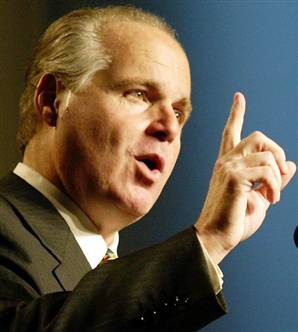
Anyways, from what I understand, Michelle O. was vacationing at a ski resort recently with her family, and it was made known that she enjoyed a nice dinner while she was there, which included ribs. Limbaugh's comments: "The problem is, and dare I say this, it doesn't look like Michelle Obama follows her own nutritionary, dietary advice. We hear that she's out eating ribs at XXXX calories a serving with XXX grams of fat per serving. I'm trying to say that our First Lady does not project the image of women that you might see on the cover of the Sports Illustrated Swimsuit Issue or of a woman Alex Rodriguez might date every six months or what have you." He went on to say, "She's a hypocrite. Leaders are supposed to be leaders. If we're supposed to eat roots and berries and tree bark, show us how." Yikes!!!
While I am really sad that he made these comments, and would like to respond with some choice words, I think this is a great opportunity to address an important issue! Perhaps this whole exchange once again highlights the fact that we really struggle with extremes in our society. Black and white thinking, the 'diet mentality' .... call it what you want. But seriously-- who decided that you can't be healthy and eat ribs at dinner when you're on vacation (or not on vacation)? Being truly healthy requires moderation and balance. Simply eating "roots, berries and tree bark" would be just as much of a problem as if we all ate ribs for every meal.
Another thing I want to challenge is the assumption that looking like a swimsuit model is the picture of health. I could be wrong here, but it sounds like Limbaugh is saying that Mrs. Obama should look like a model. You cannot tell how healthy someone is simply by looking at them. Of course in extreme cases, yes- you can see with your eyes when someone might be ill (very underweight or very overweight). But people who may look fit, toned or 'in shape', thin, those who look average and healthy, ... they may have heart problems, blood pressure problems, bone density issues, etc due to unhealthy behaviors (diet pills, over exercise, steroids, purging, etc)... You never know how someone is treating their body and you never really know how healthy someone is just by looking at them. To infer that Michelle Obama needs to look like a swimsuit model in order to prove that she is following her own dietary advice is almost kind of funny because it is just so not true. The suggestion that swimsuit models or girls that A-Rod dates are the barometer of health is, in my opinion, one of the reasons why women in our culture struggle so much with knowing what it is to be truly healthy, not to mention why they have a tough time believing that beauty comes in all shapes and sizes. Most people (95% of the population in fact) could be healthy, balanced eaters and no matter what, will not ever have bodies that look like models. 5% of the population has a body type in nature that resembles that of a model. And then there is airbrushing... many of the models and images that we see are not even real. The point is- we aren't all made the same and we all have different body types, bone structures, etc. It is irresponsible to perpetuate the myth that 'health' looks one way, but it is also irresponsible for us to buy into it.
This post is getting lengthy- so I will conclude by encouraging you to think about what true health is and where you came up with your beliefs about what it is to be healthy. 'Health' is a loaded word. Limbaugh's assertions about health are clearly skewed, but remind all of us that we need to take a step back and consider what true health really looks like. Are extremes a measure of health?? How do you know if you are being truly balanced in your approach with food? These are important questions to consider.
Saturday, November 6, 2010
Drunkorexia Revisited
Tuesday, October 5, 2010
Mean Girls, Fat Talk and A Video Contest!
Monday, September 6, 2010
Staying Skinny Beats What??
Does anyone else see this drive for thinness as a problem? Why does being thin supercede other values in life, like career and love?! And why aren't we doing more to work on changing the unhealthy notions and beliefs about our weight and bodies? Why are magazines and media outlets making irresponsible comments and perpetuating eating disorder myths (check out one response to W Magazine here)? More education and awareness needs to be happening, and fast!! You can start today by educating yourself about eating disorders- the facts and the myths- by going to NEDA's website for more information! It is important to note that the media does not cause eating disorders. The media can pose a risk to someone who is genetically determined to develop an eating disorder, but it is not one thing that typically causes them. I would encourage you to think about what else can you do today to educate yourself (and others) and then raise awareness.. I would love to hear your ideas- you can post a comment or send me an email if you have any ideas!
Thursday, August 19, 2010
NEDA Coach and Trainer Toolkits are Out! Part 1 : )
Me: I have been excited to hear that you are working with NEDA to make toolkits for trainers and coaches to help educate them about eating disorders. I know that this is still a work in progress and is not yet available, but can you share a little bit about your involvement with this project?
Nancy: Sure! Through my work as a former People magazine correspondent and as co-author with Marcia on The Parent’s Guide to Eating Disorders, I have reported various articles on eating disorders and body image. NEDA asked me to bid on the job of Toolkit Coordinator for their newest online Toolkit for coaches and trainers, and I was lucky enough to be contracted to do the job. NEDA’s existing online Toolkits are the Parent Toolkit and the EducatorToolkit. I started working on the Toolkit in January. At the moment, the Advisory Committee, made up of about a dozen experts in the field, is reviewing the Toolkit. We hope it will be online in late spring or summer, and will be publicized at the NEDA conference in New York City in the fall. We are now brainstorming on ways to publicize the Toolkit, so you can definitely help with that by telling your readers about it. If you have other ideas of ways to publicize the Toolkit, please let me know!
Me: What kind of information is being provided to trainers and coaches in these toolkits, and what are the goals of such a project?
Nancy: The first sections of the Coaches Toolkit will provide basic information on the different eating disorders: anorexia, bulimia and EDNOS, binge-eating disorder and disordered eating. It will answer frequently asked questions and debunk common myths about eating disorders; detail factors that put athletes at risk for eating disorders (for example participating in a weight-class sport, such as crew or wrestling, aesthetic sports, such as gymnastics or figure skating, or endurance sports, cross country, Nordic track skiing); discuss eating disorder symptoms common to athletes, and the Female Athlete Triad (a syndrome of three interlocking symptoms, disordered eating, irregular periods and low bone mass). There will be sections on encouraging healthy exercise among athletes, the role of the coach in eating disorders, and prevention among middle and high school athletes. Oh, and there will also be athletes’ own stories and conversations with professionals: nutritionists, psychologists and coaches themselves. The goal is to reach out to, educate and offer support to coaches and trainers who are on the front lines of eating disorders, but often do not know how to recognize or handle the problem.
Tuesday, July 20, 2010
Project HEAL Q&A- Part Two
Tuesday, July 6, 2010
A Diet is a Diet is a Diet
Wednesday, June 16, 2010
Actions Speak Louder Than Words
Late last year (2007) the blogosphere got pretty mean about actress Jennifer Love Hewitt looking a little heavier than normal. At the time she said she was a size 2 and that she wasn’t fat, but she mostly worried about how the attention would affect image-conscious girls who saw the media calling her fat. While she says the two aren’t connected, she’s lost 18 pounds in the last four months with the help of trainer Stevie Sant’Angelo.
Hmmm. It seems odd to me that those two things were not connected. But either way, I find it all the more ironic that she is doling out such advice to young women to love the way their bodies look, since her way of loving her body was to change hers! Jennifer Love Hypocrite?
While I cannot even begin to imagine the kind of pressure a female in Hollywood must face to conform to unrealistic standards of beauty, I also do not think that this justifies hypocrisy. If she loved what she looked like so much, why did she feel the need to change? She is sending such an unfortunate message to young women because while she is saying, "When I meet young girls, I'm always like, 'Just do me one favor, love what you look like right now – and remember I said it 10 years from now because it's the greatest gift I can give", her actions are telling a very different story. This quote was taken from the People.com article, which you can read by following this link. A few lines down, she says that she was so embarrassed by the pictures of her body taken in 2007 that she gave up eating 'her beloved donuts' and started fitting in workouts to her schedule so that she could 'get healthier.'
I am all for being healthy. Trust me. But it just seems like she is sending a very mixed message! And I think we are all too often inundated with mixed messages from the media, to the point that we fail to see things as they really are. It's helpful to expose mixed messages when we see them, and I would encourage you all to be mindful of what you see and hear! When it comes to the media, what you see is not what you get.
I guess I just feel bad for Jennifer Love Hewitt because I feel like she is really the one who is losing here. You never win when you have to change your outer appearance in order to love yourself and be happy. Yes, sometimes we do have to make changes so that we can become more healthy, but happiness and love are not dependent on or defined by how we look in a bikini, or how good we look in pictures. Happiness, love and beauty really do come from the inside out- not by losing 18 pounds in 4 months.
Monday, June 14, 2010
Race For The Cure and Body Image
Thursday, June 10, 2010
Amy Lambert used to tell herself what Urban Outfitters is telling millions of other young women: Eat Less.
It wasn't unusual for Lambert, who had an eating disorder for more than eight years, to consume little more than one container of yogurt in a day. Now recovering, Lambert led a protest last week outside of Urban Outfitters at Southpoint mall in Durham.
Last week, Urban Outfitters placed in their online catalogue a gray V-neck T-shirt worn by a rail-like young woman. On the front, in script, the words "Eat Less."
"Urban Outfitters targets a young demographic, and they are reinforcing the idea that eating disorders are a choice, not an illness," she said.
Four other women from a Durham Eating Disorder Support Group joined the peaceful protest, brandishing signs that read, "Messages Can Re-Enforce Deadly Beliefs" and distributing fliers titled "Messages in Media: 'Eat Less' is Humor That's Not Funny."
Mall security shut down the protest 30 minutes later.
"We want to make it a friendly family environment," said Public Safety Officer Sellers, who refused to disclose her first name. "We can't just have people here doing that [protesting and handing out literature]."
Urban Outfitters did not return the Indy's calls or e-mails regarding the ad campaign, but after national outcry the T-shirt was removed from the chain's website, though the shirts that have already been shipped will be in stores. When the Indy visited the store and asked for the T-shirt, it was not on the sales floor. An employee who didn't want to be named called the slogan "harsh."
At least 24 million Americans suffer from eating disorders, which have the highest mortality rate of any mental illness. Twenty percent of people with an eating disorder will die prematurely from complications related to their disease. Telling an individual with an eating disorder to "eat less" aggravates emotional, psychological and physical issues. And for those still stuck in dangerous patterns, it is a message of validation, says Chase Bannister, clinical director for Carolina House.
In fact, the T-shirt has been posted on "pro-anorexia" sites as a source of "thinspiration."
"The banner-statement 'Eat Less' can be a stinging trigger for women and men with anorexia, bulimia or binge-eating disorder," Bannister added, "ultimately providing reinforcement for the distorted belief our patients work so hard to stamp out: 'I will never be okay unless I'm thin.'
The women said by holding the protest, they sought to empower themselves and spread a message of acceptance for a healthy body. Sandy Yarnall had anorexia for more than half of her life. She finally received treatment in 2008. "I struggle every day with wanting to go back to a very unhealthy size, and where I was before recovery, and seeing that message did distress me."
Rebecca Clemins has had an eating disorder for 25 years. "Urban Outfitters put this tee on a waif-like model, which enforces the idea that being waif-like is preferred, and they are encouraging a lifestyle that is killing young women," she said.
"I can't imagine endorsing something that creates so much misery," said Carson Hadley, who developed her eating disorder in eighth grade. She had to drop out of high school during her senior year to get in-patient treatment at Carolina House. "That shirt reminded of what I can't be if I want to live."
Tuesday, June 8, 2010
Anyone Need a Body Image Boost??
Thursday, May 27, 2010
Athletes and Eating Disorders- Part 1
Me: I have been excited to hear that you are working with NEDA to make toolkits for trainers and coaches to help educate them about eating disorders. I know that this is still a work in progress and is not yet available, but can you share a little bit about your involvement with this project?
Nancy: Sure! Through my work as a former People magazine correspondent and as co-author with Marcia on The Parent’s Guide to Eating Disorders, I have reported various articles on eating disorders and body image. NEDA asked me to bid on the job of Toolkit Coordinator for their newest online Toolkit for coaches and trainers, and I was lucky enough to be contracted to do the job. NEDA’s existing online Toolkits are the Parent Toolkit and the EducatorToolkit. I started working on the Toolkit in January. At the moment, the Advisory Committee, made up of about a dozen experts in the field, is reviewing the Toolkit. We hope it will be online in late spring or summer, and will be publicized at the NEDA conference in New York City in the fall. We are now brainstorming on ways to publicize the Toolkit, so you can definitely help with that by telling your readers about it. If you have other ideas of ways to publicize the Toolkit, please let me know!
Me: What kind of information is being provided to trainers and coaches in these toolkits, and what are the goals of such a project?
Nancy: The first sections of the Coaches Toolkit will provide basic information on the different eating disorders: anorexia, bulimia and EDNOS, binge-eating disorder and disordered eating. It will answer frequently asked questions and debunk common myths about eating disorders; detail factors that put athletes at risk for eating disorders (for example participating in a weight-class sport, such as crew or wrestling, aesthetic sports, such as gymnastics or figure skating, or endurance sports, cross country, Nordic track skiing); discuss eating disorder symptoms common to athletes, and the Female Athlete Triad (a syndrome of three interlocking symptoms, disordered eating, irregular periods and low bone mass). There will be sections on encouraging healthy exercise among athletes, the role of the coach in eating disorders, and prevention among middle and high school athletes. Oh, and there will also be athletes’ own stories and conversations with professionals: nutritionists, psychologists and coaches themselves. The goal is to reach out to, educate and offer support to coaches and trainers who are on the front lines of eating disorders, but often do not know how to recognize or handle the problem.